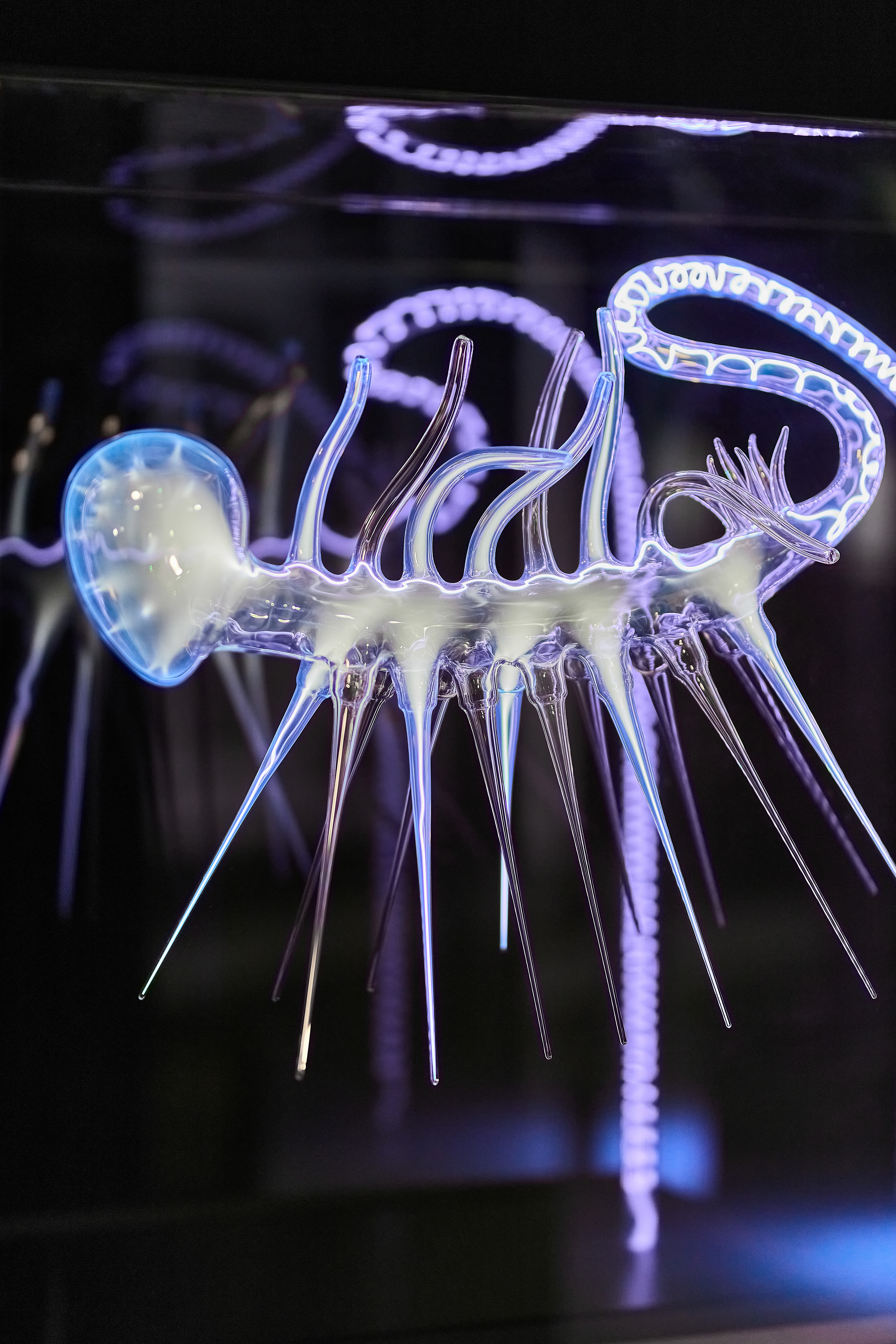
Martin Walde:
Neom, 2020
(from the HALLUCIGENIA series)
Sculpture (borosilicate glass, high frequency transformer; noble gases: Xe, Ar)
Martin Walde’s glass sculpture, reminiscent of a strange primeval creature, is animated by the pulsing flow of plasma inside it. The creature that inspired the work is a soft-bodied Cambrian organism called Hallucigenia, known from 570-million-year-old fossils. Hallucigenia belonged to the now-extinct lobopodians, from which tardigrades, arthropods and velvet worms evolved. Its name derives from its bizarre, dream-like appearance. The scientific debates surrounding it have proved no less surreal, producing numerous unexpected twists since the 1980s.
This tiny creature, barely 2 cm long and thinner than a human hair on average, had pairs of large spines along one side of its body, while on the other side it trailed delicate, stick-like appendages tipped with claws. Over the decades, scientists have proposed a succession of conflicting interpretations: was it an appendage of a larger organism or a separate animal in its own right? Which side bore the legs and which the spines? Only in the mid-2010s was it conclusively ascertained which end was the head.
The speculation and spirited disputes surrounding this palaeontological find have resonated far beyond the scientific community. They have inspired science-fiction writers and even influenced evolutionary theory itself.
(Borbála Szalai)