Laure Vigna:
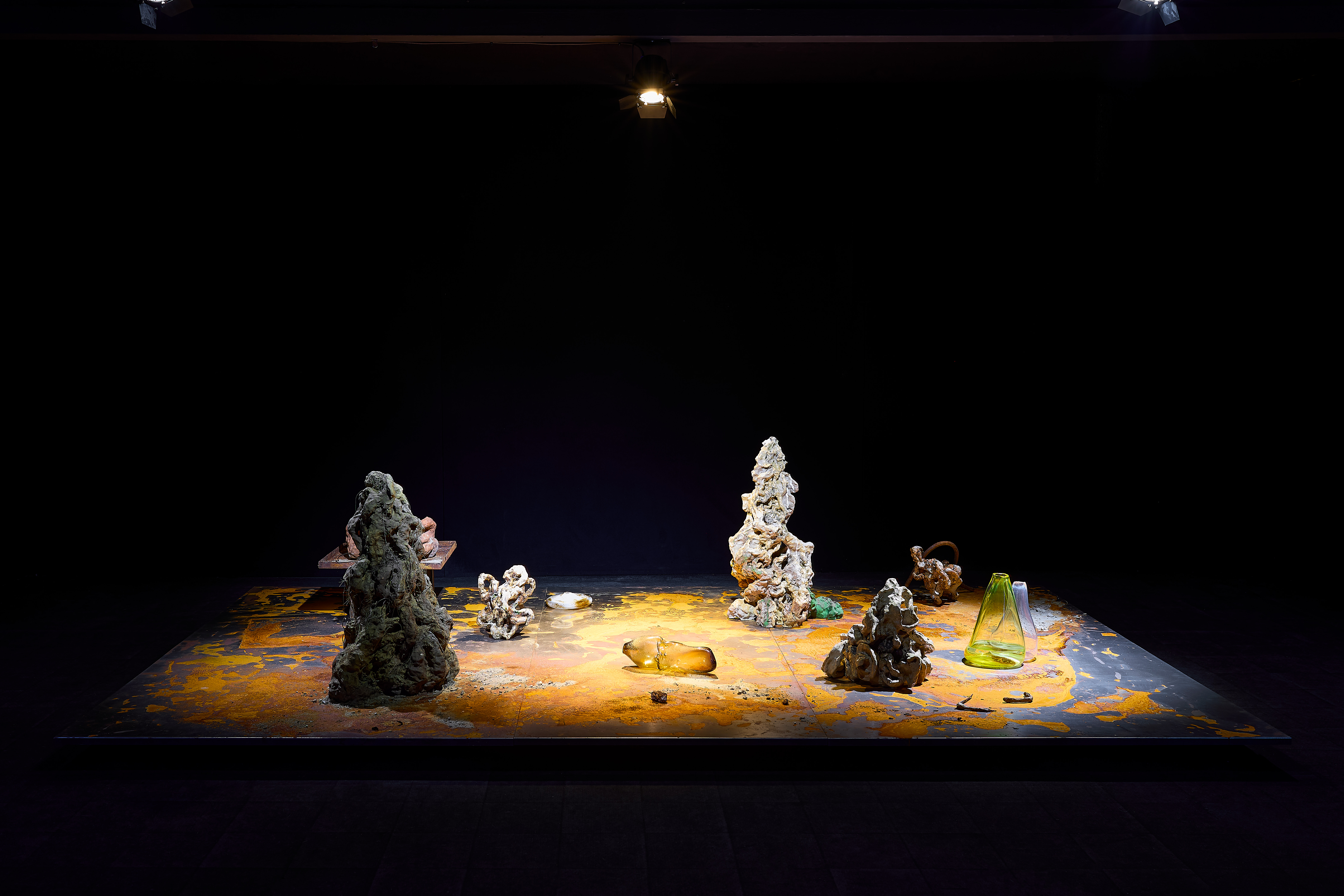
There are Tides in the Body, 2025
(original setting 2022)
Mixed media installation
The sculptures using despised, contaminated, dirty and moist materials host living microorganisms from sediments and water samples borrowed from the Danube’s riverbanks in Budapest.
The title refers to urban river systems as well as our own contaminated fluid systems. The installation attempts to portray the horizon of toxic ecological layers and possibilities appearing in our metabolic systems from multiple perspectives and observe the impact of the invisible flowing fluids in organisms and habitats.
Laure Vigna’s sculptural research lies at the intersection of life sciences, social sciences, environmental studies and the history of science with a focus on examining matter from a sociopolitical perspective. She is interested in the relationships and interconnections between the porosity and permeability of bodies as well as the modes and forms of toxicity that lead to practices of dispossession of land and organisms. She researches microbial legacies stored in landscapes and bodies to study their functions in memory, archiving and modes of communication by questioning material flows, displacement and toxicity.
(Borbála Szalai)
Components: blown glass, bronze, ceramics, unfired industrial stoneware, soil from the Danube’s riverbanks, sisal, rusted steel, spirulina, bacteria (iron-oxidising bacteria, E. coli, Salmonella, Shigella, Staphylococcus, Yersinia), viruses (bacteriophages, enteric viruses) and other microorganisms, grass, seeds, shells, phytoplankton (including green algae) and zooplankton, algae, salt, sewage, fungal spores, microplastics, bits of wood, oestrogens and other hormones (including 17β-estradiol and ethinylestradiol), possible traces of high levels of nitrogen and phosphorus, heavy metals (aluminium, mercury, lead, cadmium, arsenic, chromium, copper, nickel, zinc, manganese), pharmaceuticals (antibiotics such as sulfamethoxazole and ciprofloxacin; NSAIDs such as diclofenac and naproxen; beta-blockers, carbamazepine, caffeine, antidepressants, sleeping medication and antihistamines), chemicals (detergents, food additives, preservatives, cosmetics), pesticides and organochlorines (atrazine, DDT remnants, flame retardants such as PBDEs and NBFRs, PCBs, HCBs.
This installation is a second iteration of an immersive work originally presented at Goldsmiths, University of London. Part of the ceramics were made during a residency at Cove Park (Scotland) as part of Magnetic Residencies 2, supported by Fluxus Art Projects).