MORE THAN HUMAN
“Life that survives begins dancing to a different rhythm before the beat even becomes perceptible, offering only a fleeting moment’s comfort before it changes again,” writes palaeontologist Riley Black, continuing: “There are notes we can’t even perceive yet, and ones we may never hear.” However, to catch even a fragment of those rhythms that surround us, we must learn to listen more sensitively to non-human sounds, the faint murmur of processes unfolding from the microscopic to the planetary scale, and to discover what possibilities such a new, interspecies, shared resonance might hold for all of us.
A non-human perspective not only entails a different, more empathetic attentiveness but also allows us to adopt a new approach to the deep entanglements between human activity and natural systems, their broader environmental, social and political consequences, as well as our collective and individual responsibilities and opportunities.
A wide range of voices can be heard in the displayed works: the ultrasound of bats, the deep vibrations of the ocean floor, the pulsating sounds of soft robots and the offbeats of bacteria, millennia-old fossils and the latest biotechnological innovations. The exhibition seeks to present artistic approaches that explore the potentials of a more open and sensitive world, one that is more than human.
Never before has it been more urgent than it is today to reassess our relationship to non-human forms of life and to reconsider our place in the natural world – as entities forming part of nature, rather than exercising dominion over it. Far too long now, Western civilisation has lived under the illusion that humankind occupies a privileged position in the hierarchy of nature and the living world, treating nature and other species merely as resources to be exploited instead of acknowledging them as beings endowed with their own intelligence and agency. This hierarchical mindset has led to the systematic marginalisation or neglect of countless forms of life – from the microscopic organisms that sustain ecosystems to the animal world’s complex forms of social organisation. We are only beginning to truly understand the communication systems and modes of coexistence of these life forms. In light of the increasingly undeniable manifestations of an ecological crisis, it has become imperative to fundamentally rethink our relationship with the living world and to recognise that our own survival is inextricably linked to the well-being of the planet’s entire ecosystem.
We must cultivate new kinds of sensitivity, new ways of paying attention and caring for all forms of life in the biosphere, including those previously ignored or undervalued. The knowledge systems of tribal cultures have always understood what Western science is only now beginning to grasp: that humans exist in intricate networks of reciprocal relationships with plants, animals, fungi and even geological processes. The exhibition presents artistic practices that nurture this expanded and increasingly multifaceted awareness. By showing the structural creativity of spiders, the agency of microscopic plankton and the perspectives of endangered species, or by making perceptible the navigational capacities of bats normally inaudible to humans, the exhibited works invite visitors to move beyond the position of the detached observer and let genuine cooperation and empathic attentiveness define our relationship with all forms of life.

In addition to observing major evolutionary leaps, seeking genuine patterns of coexistence and exploring the adaptive strategies of living organisms, the exhibition also investigates symbiotic relationships that go beyond the conventional boundaries of biology and encompass artificial intelligence and machine entities. With the emergence of synthetic biology, neurotechnology, biotechnological research and soft robotics, life has become constructible technology. Whether we think of complex biotechnological innovations or everyday phenomena we experience in the digital realm such as the blue light of a monitor screen, technology has a pervasive impact on our bodies, health, behaviour, emotions and the ways in which we engage with our surroundings. Several of the works demonstrate hybrid collaborations between humans, living beings and artificial entities, suggesting that our future coexistence on this planet may necessitate a broader definition of “life.” These speculative symbioses may lead us to reflect on whether the time has come to devise ethical frameworks capable of accommodating previously unknown forms of intelligence and agency, allowing space for forms of cooperation between species and entities that have seemed unimaginable until now. As AI becomes more and more sophisticated, questions naturally arise about the forms and content of consciousness and agency emerging from the operation of technological systems.
The exhibits were conceived from urgent questions about the future of our planet. Confronted with climate change, the decades-long phenomenon of the mass extinction of some species and the accelerating exploitation of natural resources, artists are developing new ways of observing, perceiving and engaging with previously overlooked forms of life. Moving beyond an anthropocentric perspective, these works adopt a posthuman approach that recognises the autonomy, intelligence, value and indispensable role of all living beings in sustaining the ecosystem.
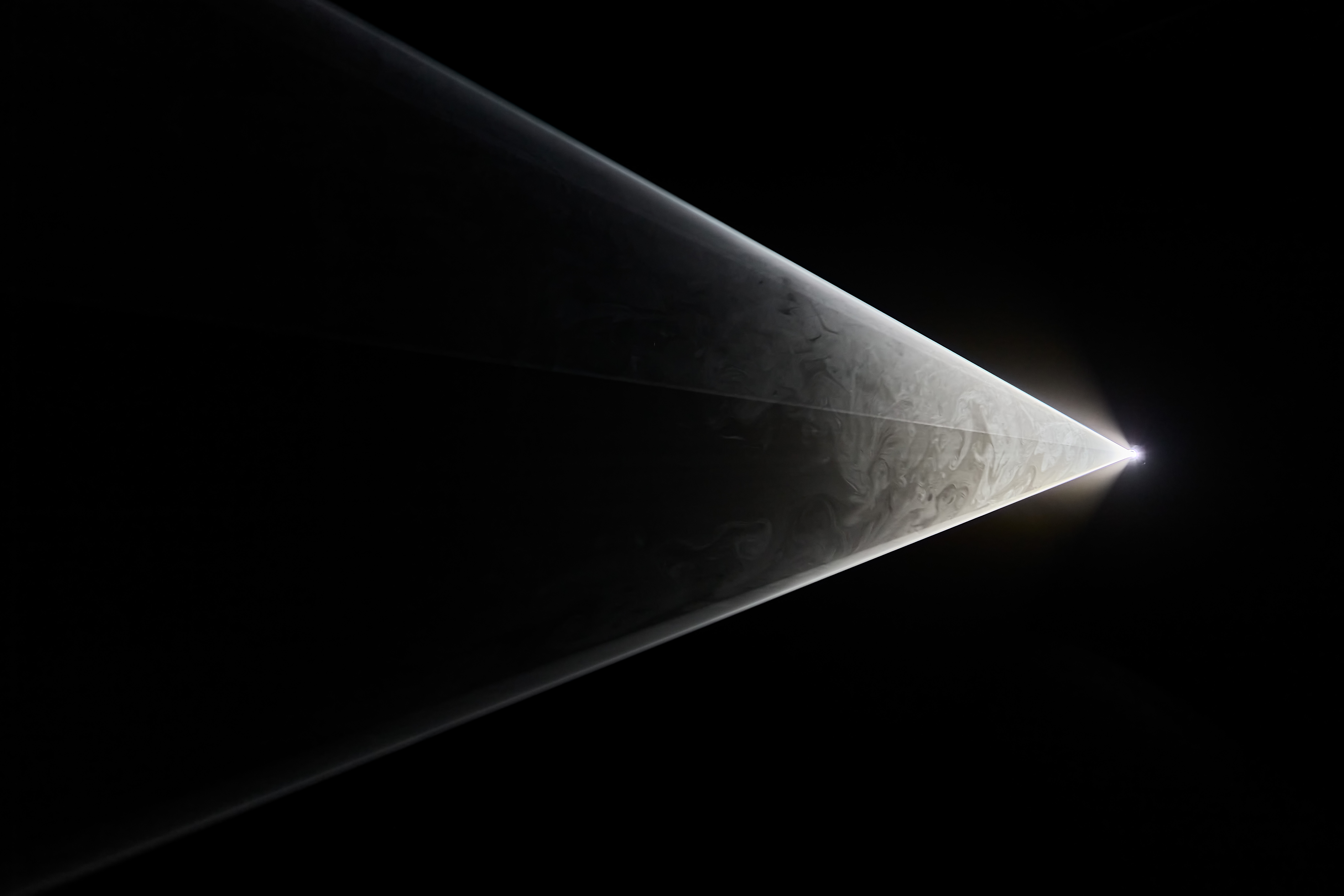

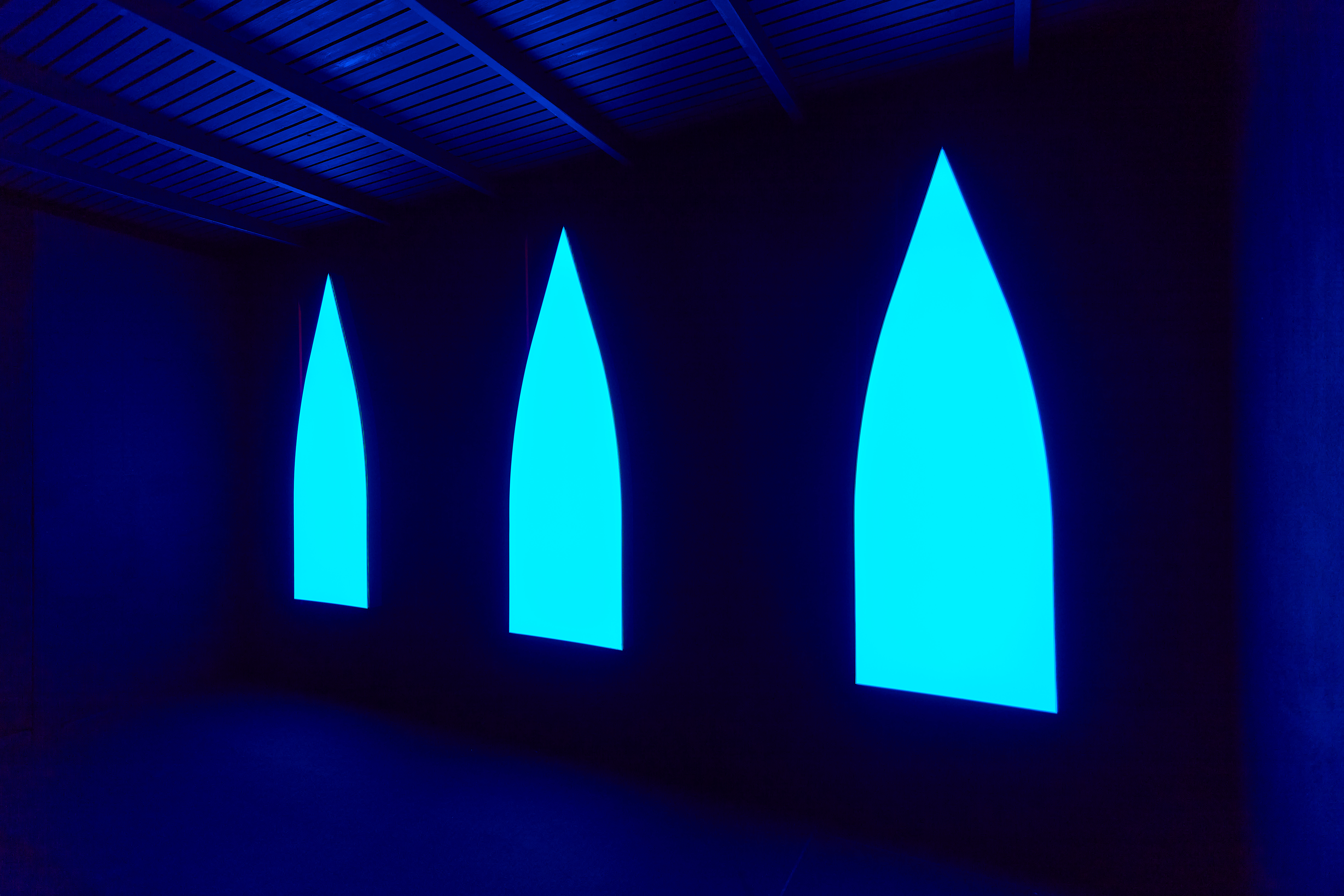
The exhibition also experiments with novel forms of materiality: soft, liquid, porous and volatile substances, artificial, biological and toxic materials as well as silicone that imitates animal tissue or human skin, while addressing issues of light made material-like, invisibility and immateriality. Ólafur Elíasson’s installation of coloured glass discs turns the process of perception itself into a medium, revealing how our understanding of reality shifts due to movement and sensory experience. The exhibition also traces the genealogy of immersive projections, from Anthony McCall’s classic early light works and Otto Piene’s 1966 installation, which sought solace through art in a world haunted by the threat of nuclear catastrophe, to contemporary works raising awareness of today’s global environmental challenges.
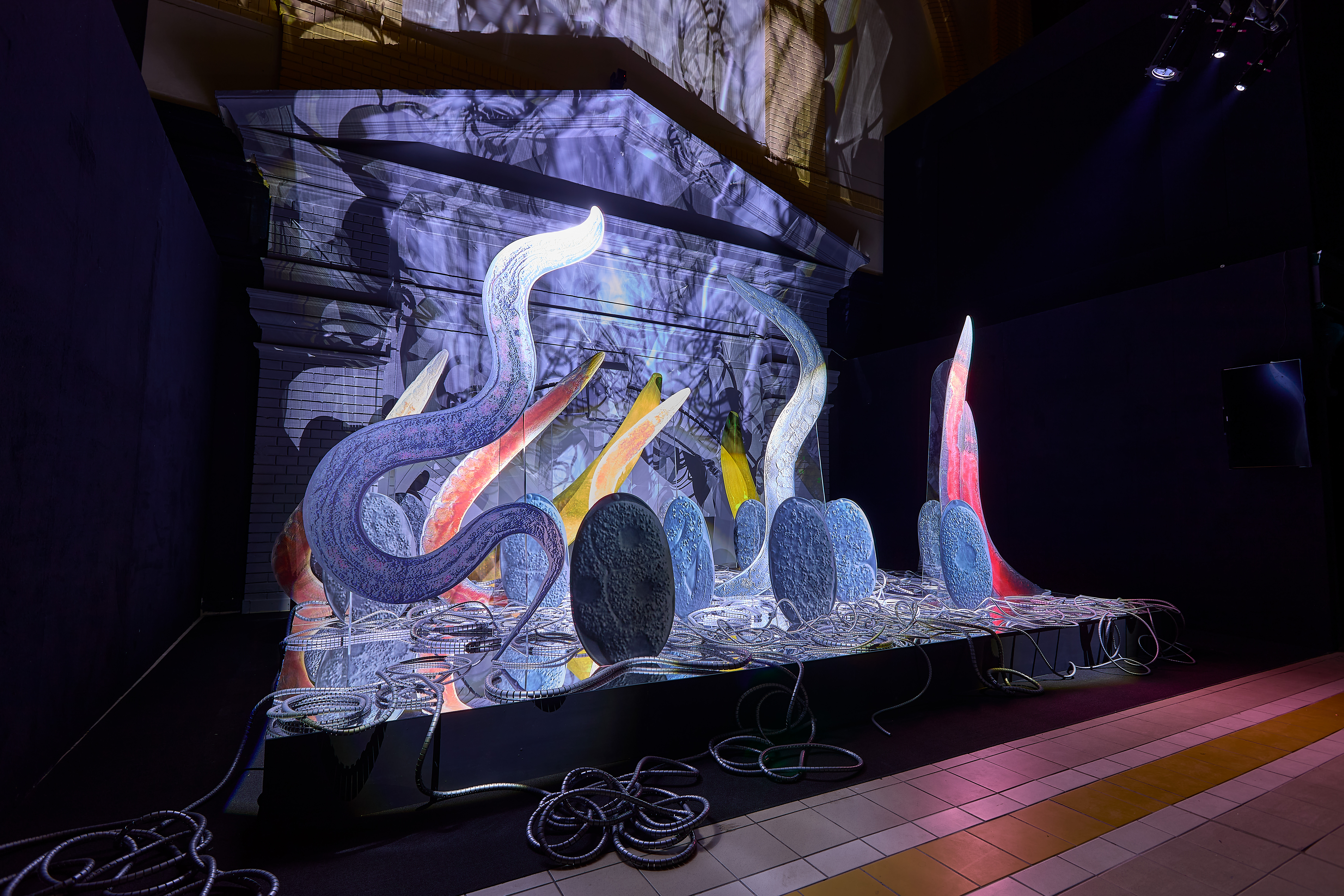
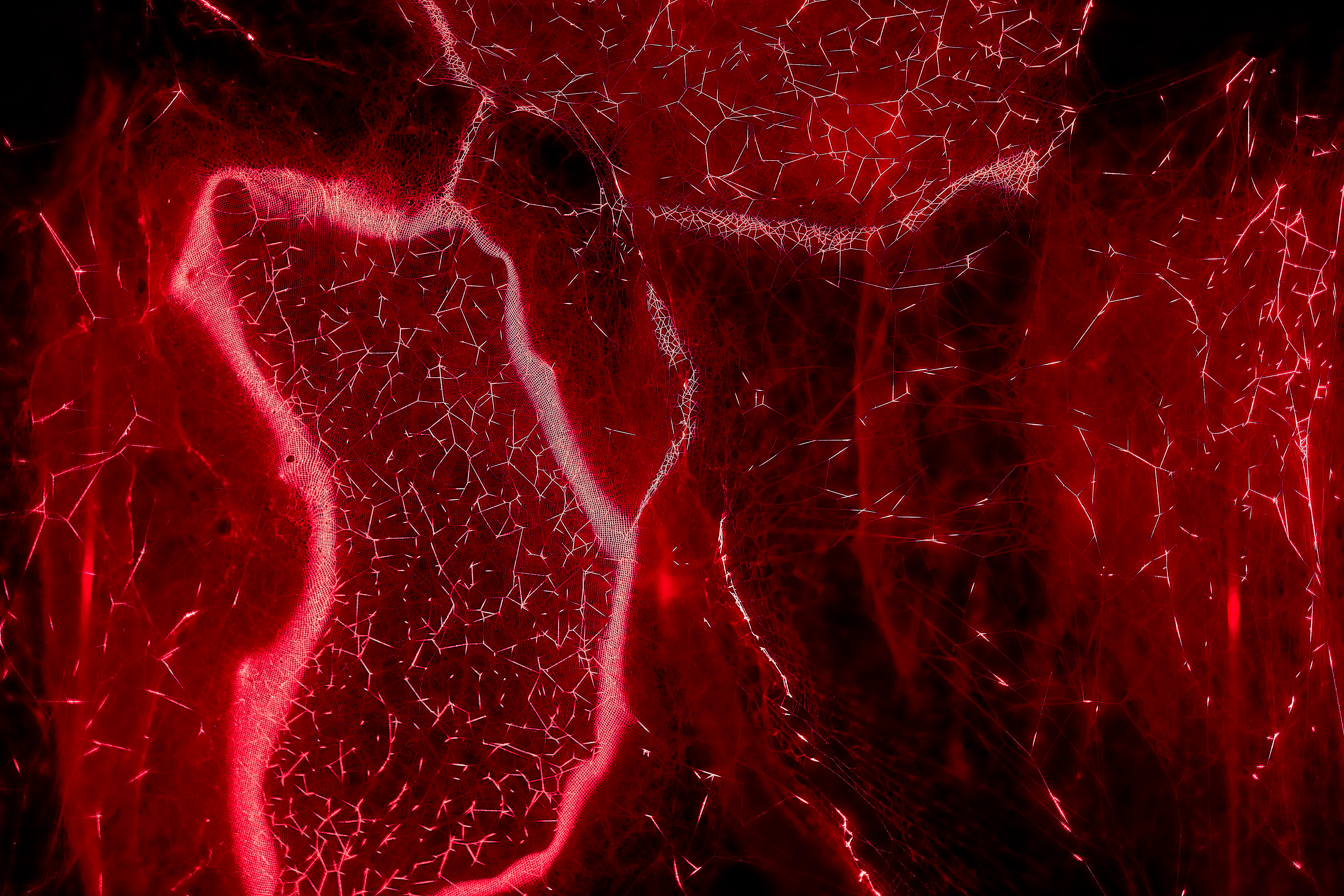
Tomás Saraceno scans the hidden architecture of complex spiderweb systems with laser light, interpreting these fragile yet resilient structures as models for sustainable coexistence. Katja Novitskova reveals the invisible role of microscopic worms in biomedical research, showing how non-human beings contribute to human knowledge production. Andrea Ling Shin’s living architecture collaborates with ancient cyanobacteria – organisms that generated Earth’s oxygen billions of years ago – to construct structures actively involved in battling the greenhouse effect. Jennifer Allora and Guillermo Calzadilla give voice to endangered Puerto Rican parrots living in the shadow of humanity’s search for extraterrestrial intelligence, questioning why we look for messages from distant galaxies, while ignoring local species facing extinction. From Wim van Egmond’s microscopic universes to Jakob Kudsk Steensen’s interactive projection evoking ephemeral desert lakes, these works expand our perceptual awareness, enabling us to notice life forms that usually elude human perception. They inspire viewers to recognise that intelligence, creativity and agency extend far beyond the human condition.
Ranging from the beginnings of evolution to speculations about the future, from the molecular to the planetary scale, the exhibition leads us into realms that may be well known, largely hidden from or invisible for human perception, yet can challenge our common perspectives by raising new, non-anthropocentric questions. We can only hope that this shift in perspective may make audible something of the quiet rhythms of the future.
Exhibiting artists:
Jennifer Allora & Guillermo Calzadilla, Yasuhiro Chida, Mat Collishaw, Wim van Egmond, Ólafur Elíasson, fuse*, Balázs Ágoston Kiss, Kitty Kraus, Andrea Ling Shin, MAEID – Büro für Architektur & Transmediale Kunst (Daniela Mitterberger, Tiziano Derme), Paula Malinowska, Guillaume Marmin, Erik Mátrai, media.tribe, Anthony McCall, Jonny Niesche & Mark Pritchard, NONOTAK, Katja Novitskova, Tony Oursler, Harrison Pearce, Otto Piene, Sébastien Robert & Mark IJzerman, Pamela Rosenkranz, Tomás Saraceno, Mona Schulzek, Jakob Kudsk Steensen, Rhoda Ting & Mikkel Bojesen, Mónika Üveges, Nick Verstand, Viktor Vicsek & Rodrigo Guzman, Laure Vigna, Martin Walde, Xenorama – Studio for audiovisual art, 00 Zhang
Artistic director: Szabolcs Vida
Curators: Barnabás Bencsik, Borbála Szalai
Head of production and assistant curator: Dalma Kovács
Assistant curator: Eszter Gyöngyösi